


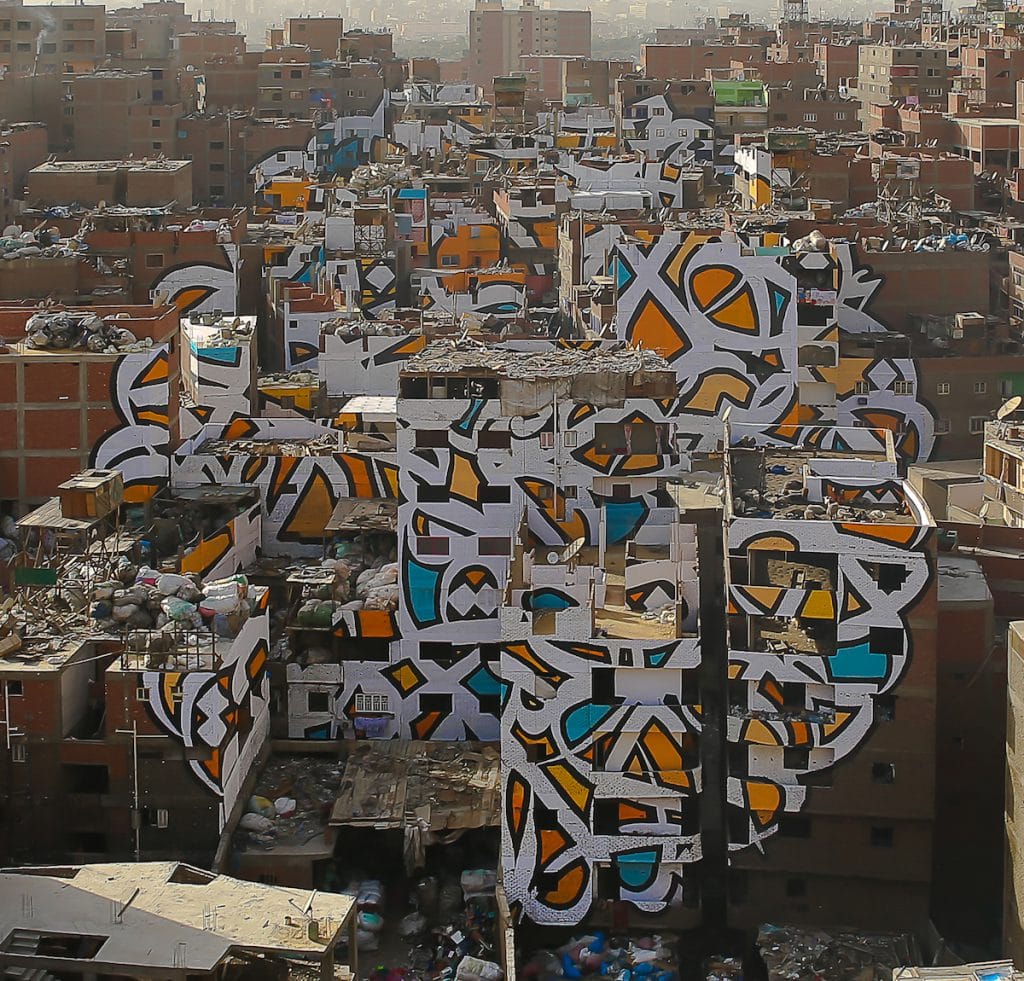
A plastic bag doesn't arrive at Up-Fuse as a material. It has to become one.
In Manshiyet Nasser, Cairo, discarded plastic bags pass through many hands before becoming the patterned sheets behind Up-Fuse's bags and accessories.
They are collected and sorted by local families, hand-cut by women artisans, transformed through heat and pressure, checked one sheet at a time, and finally handed to our in-house bag-making team.
It is a plastic bag upcycling process we have spent more than a decade refining — and one that has given more than 4 million plastic bags a different next chapter since 2015.
Step 1: Sourcing Plastic Bags in Manshiyet Nasser
Every sheet begins in Manshiyet Nasser, an area that has become Up-Fuse's second home.
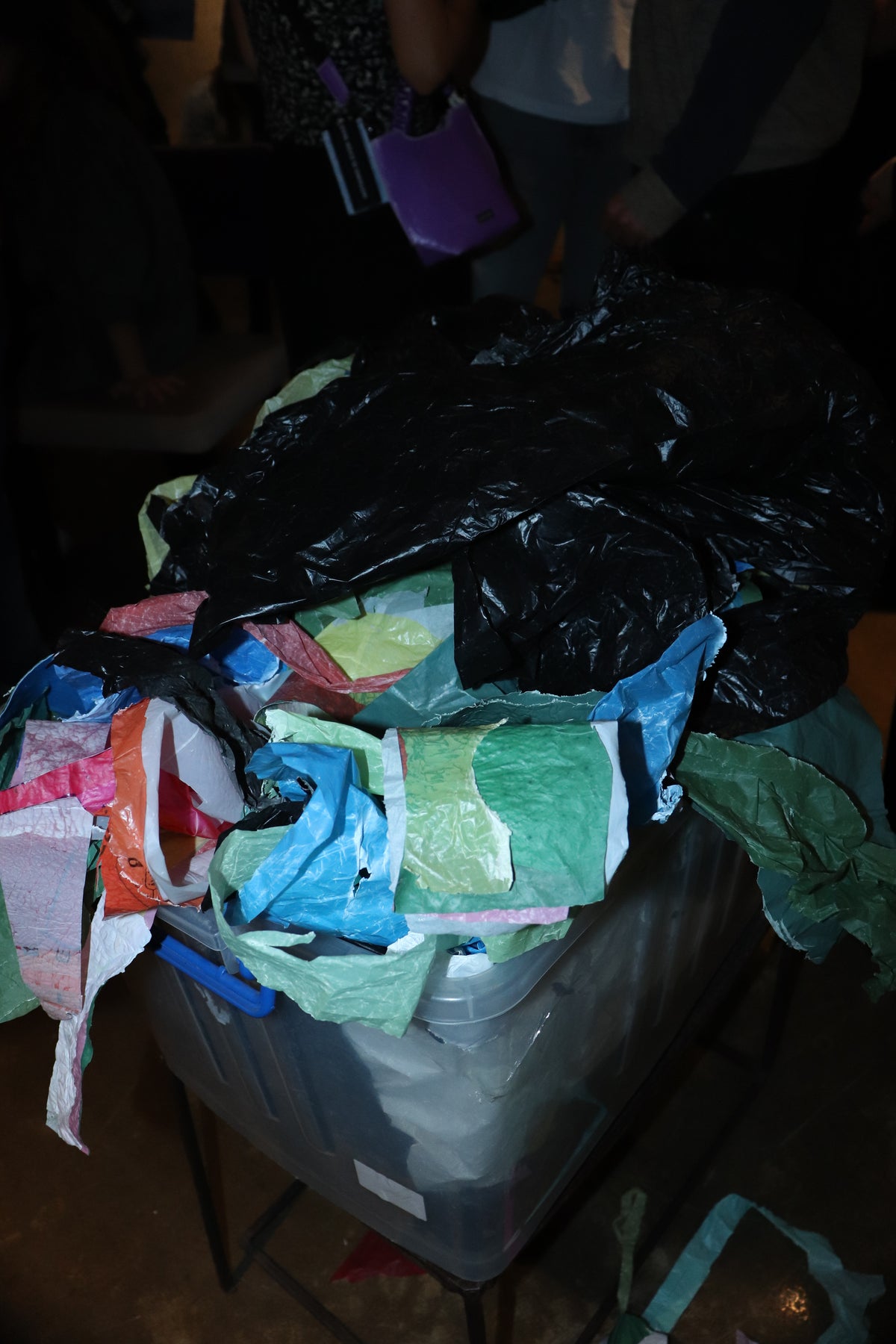
We source our plastic bags from families working in waste sorting and cleaning, then buy the selected bags and store them at our warehouse and workshop until they enter production.
Our relationship with the district goes far beyond sourcing material. Over the years, we have built lasting partnerships with local families, artisans and organizations —
an ecosystem that today connects us with around 120 families in Manshiyet Nasser. You can see this community firsthand on our Origin Stories: Mansheya Tour.
Step 2: A Design Becomes a Pattern
Before the plastic becomes a sheet, there is a design. Our production team receives an order for a specific pattern, and the Up-Fuse design team works directly with the women artisans to teach them exactly how that pattern should be created.

The plastic bags are then cut by hand and arranged according to the design. This is the moment recycled plastic fashion starts to look less like waste processing — and more like craftsmanship.
Step 3: How Is Upcycled Fabric Made? Heat, Pressure — and a Material That Never Behaves the Same Way Twice

If you've ever asked yourself how upcycled fabric is made, this is the heart of the answer. Once the pieces are prepared, the artisans heat-press the layered plastic to create Up-Fuse's signature upcycled sheets.
Here's what happens in practical terms:
- Around 20–30 plastic bags go into a single sheet
- Hand-cut pieces are arranged into the desired pattern
- Heat and pressure fuse the layers into one durable material
- No two sheets come out exactly alike — heat reacts differently to the material every time, creating natural variations in pattern, texture and finish
Rather than fighting that unpredictability, we design around it. Our patterns are developed to work with the nature of the upcycled plastic sheet, letting the material influence the final result. That is what makes every Up-Fuse sheet one of a kind.
More Than a Decade of Refining the Technique
Up-Fuse has spent around 11 years developing and improving this manual process — particularly its durability and consistency. What began with very simple tools evolved into heat presses and, eventually, the customized machines we use today.
The goal has never changed: keep the character that makes the material unique, while producing a sheet strong enough to become a functional product made to last. Read the full journey on The Brand page.
Step 4: Quality Control — One Sheet at a Time
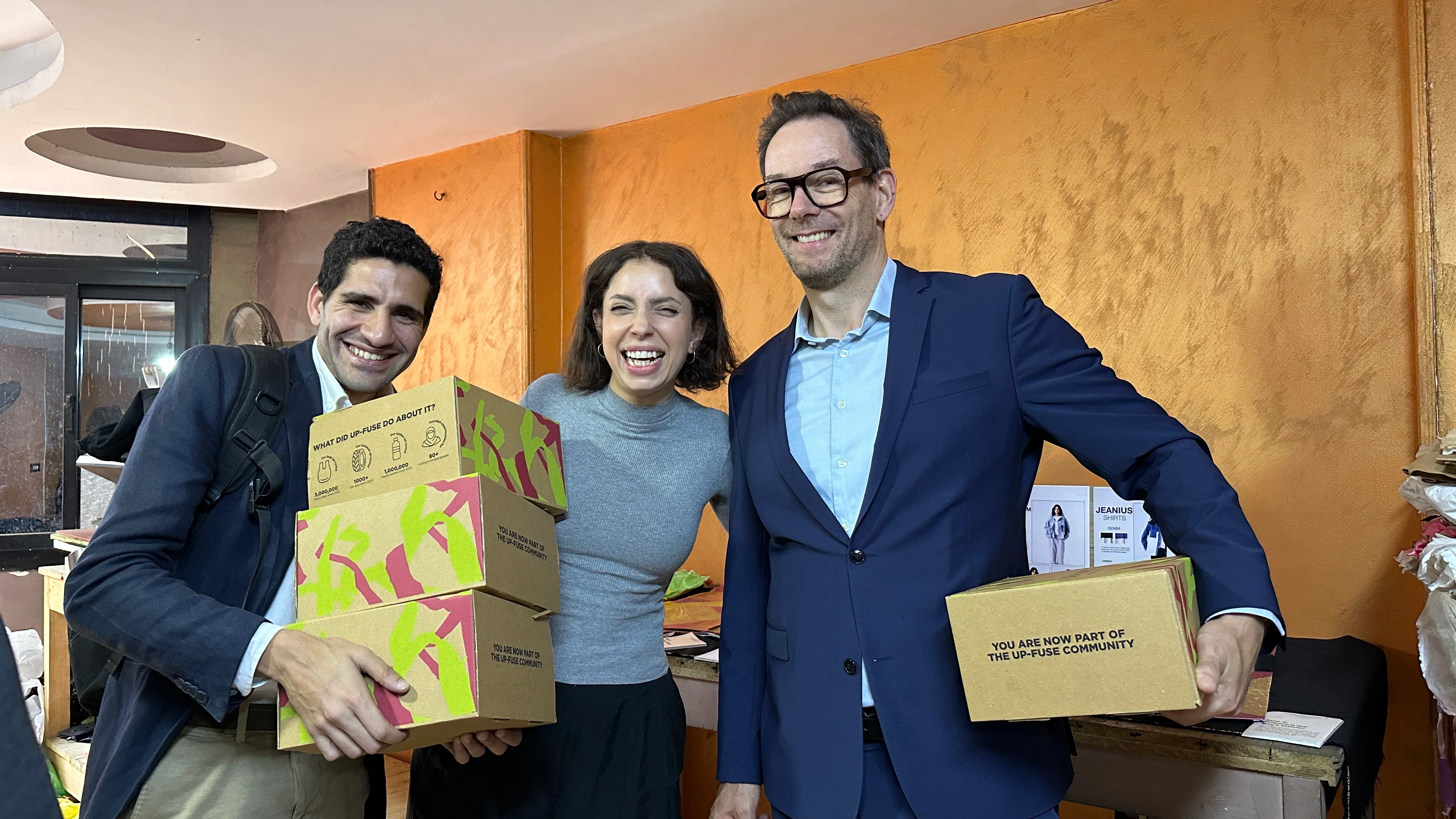
Once the sheets are complete, each one goes through quality control before moving to the next stage.
Our process leaves only around 2–5% production leftovers, and we continuously look for ways to work with even those remaining materials instead of treating them as waste.
Step 5: From Sheet to Finished Recycled Plastic Fashion
After quality control, the sheets leave our Manshiyet Nasser workshop and move to our in-house bag-making team.
Working with upcycled plastic requires years of specialized knowledge — it doesn't behave like a conventional textile — and our technicians have mastered it.
The result is recycled plastic fashion you can carry every day:
- Tote & Shopping Bags — everyday carry with a story
- Practical Plastic Laptop Bags — durable protection, zero virgin plastic
- Petal Cardholder — a small piece with a big story
- Fringe Clutch — handcrafted from discarded materials
Designed to Stay in Use
Circularity shouldn't stop at checkout. Up-Fuse plastic products are easy to hand-clean with a cloth and soap, and the material can be repaired.
Customers can return their pieces when they need attention — or simply when they want us to refresh and "pimp" an older piece. Keeping something in use longer matters just as much as what it's made from.
More Than 4 Million Plastic Bags, and Still Counting
Since 2015, Up-Fuse has upcycled more than 4 million plastic bags. But the number only tells part of the story. Behind it stands a production system built through years of experimentation, design, craftsmanship and collaboration in Manshiyet Nasser — including ongoing work with organizations from the district like APE.
For us, upcycling isn't about hiding where a material came from. It's about designing something that makes you see its potential differently.


